
🌺 What Are Research Peptides?
🌺 Research Peptides Explained:
Let’s Break It Down Simply
Peptides are short chains of amino acids (typically 2–50) linked together by peptide bonds. They are smaller and more targeted than full proteins, which are longer, complex chains of amino acids.
Simple Analogy:
Amino acids = individual building blocks
Peptides = short, specific sequences
Proteins = large, complex structures
Role in Scientific Research
Because of their size and specificity, research peptides are valuable tools in laboratory settings. Scientists use them to study various biological processes, including cellular signaling, protein interactions, and biochemical pathways.
At Pep TideZ 808, all products are offered strictly as Research Use Only (RUO). They are intended solely for laboratory research, in vitro studies, and educational purposes by qualified professionals.
None of our products are for human consumption, therapeutic use, diagnostic use, or any other non-research application. Customers are responsible for ensuring full compliance with all applicable local, state, and federal regulations.
Research Peptides – For Laboratory Use Only
We offer a selection of high-purity peptides intended strictly for in vitro and in vivo research by qualified scientists and institutions.
Examples of compounds available for research purposes include:
BPC-157
TB-500
GHK-Cu
Retatrutide
MOTS-c
Semax
Selank
Important: These products are sold for research and analytical purposes only. They are not for human consumption, diagnostic, therapeutic, or any other non-research use. Always consult relevant regulations in your jurisdiction.
🌺 How Are Research Peptides Made?
Peptide Synthesis: The Basics
Peptide Synthesis Explained
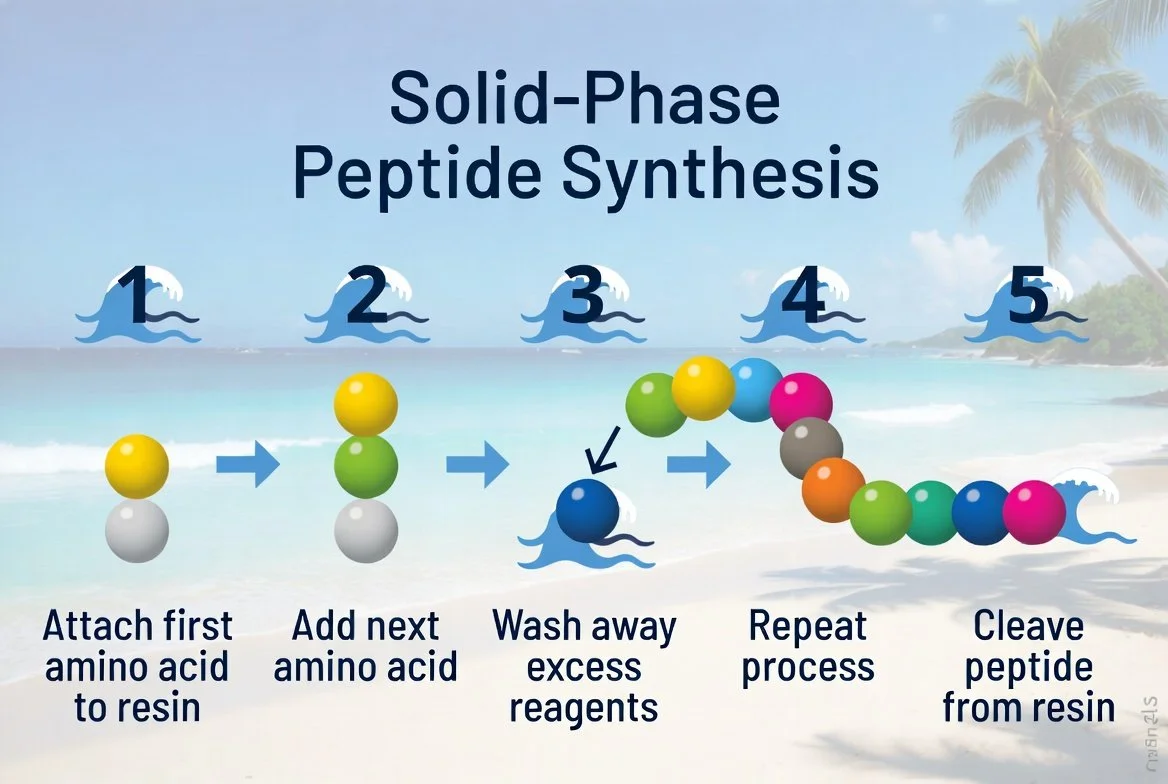
Peptides are short chains of amino acids linked in a specific order. In the lab, scientists create them using controlled chemical processes.
Main Synthesis Methods
1. Solid-Phase Peptide Synthesis (SPPS) The most common method for research peptides. Amino acids are added one by one to a solid support (resin bead). Excess materials are washed away between steps, and the finished peptide is cleaved and purified. SPPS is precise, reliable, and widely used for short to medium-length peptides.
2. Liquid-Phase (Solution) Synthesis An older method where the reaction takes place in solution. It can be suitable for very short peptides or special custom work but is more difficult to purify and less common today.
3. Recombinant Synthesis Biological method in which cells (such as bacteria or yeast) are given DNA instructions to produce the peptide naturally. This approach is often used for larger or more complex molecules.
Why the Method Matters The synthesis method affects the purity, consistency, and suitability of a peptide for laboratory research. At Pep TideZ 808, we source peptides made with established methods and provide third-party Certificates of Analysis (COAs) with every product.
All products are sold strictly for Research Use Only (RUO). They are intended solely for laboratory and scientific research. They are not for human consumption, therapeutic, or diagnostic use. Customers must comply with all applicable laws and regulations.
Questions? Reach out anytime — we’re happy to help you explore the world of research peptides responsibly. Mahalo for choosing Pep TideZ 808! 🌊